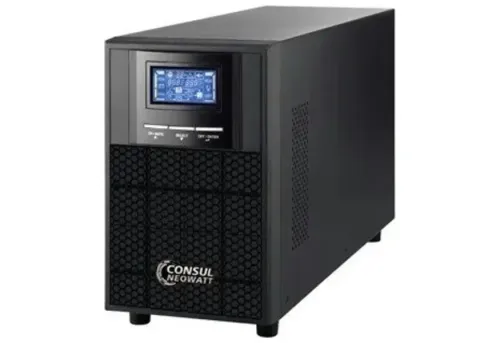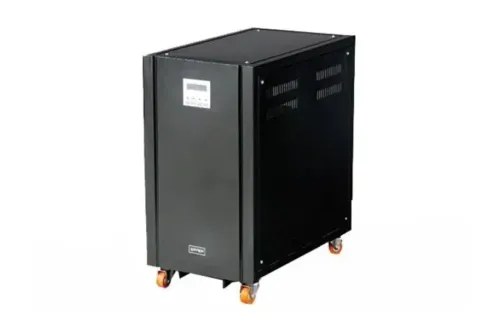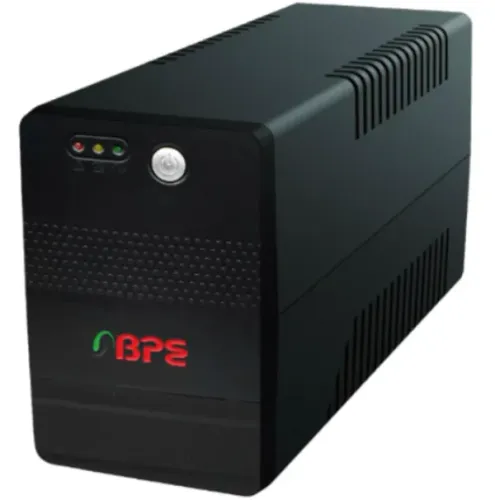
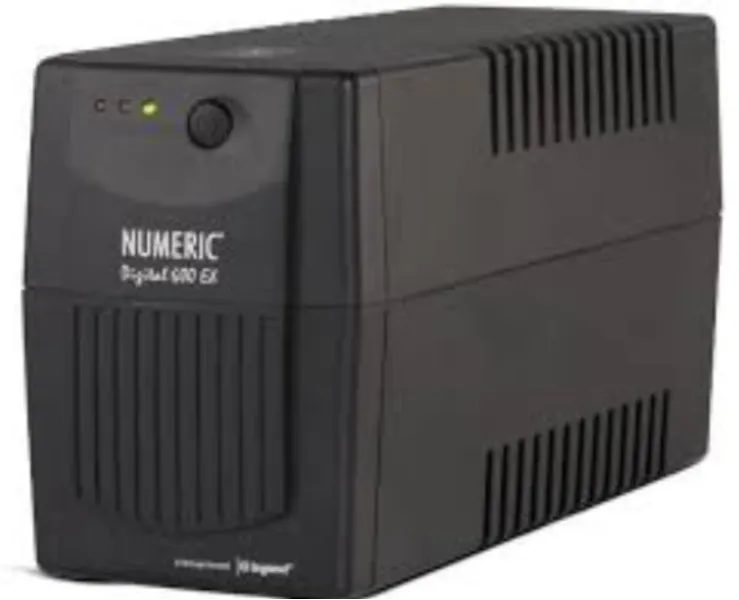
Critical electrical equipment requires more than a general promise of backup. Servers, medical instruments, security systems, industrial controllers, and communication networks may be affected by momentary interruptions, voltage disturbances, poor frequency conditions, or abrupt shutdowns.
Businesses evaluating Numeric UPS Solutions should begin with an application assessment. The selected UPS must support the load, required runtime, redundancy level, installation environment, and maintenance expectations of the facility.
Identify Equipment Sensitivity
Different devices tolerate power disturbances differently. A desktop computer may continue operating with a brief transfer time, while a sensitive control system may require uninterrupted online power.
Classify equipment according to:
- Acceptable interruption time
- Power-quality sensitivity
- Data-loss risk
- Restart time
- Operational importance
- Shutdown procedure
- Replacement cost
- Impact on customer or patient service
This classification helps determine whether a line-interactive or online UPS architecture is more appropriate.
Confirm Load and Power Factor
UPS selection should use accurate electrical data. List the VA or wattage of each device and verify whether all devices operate together. Motors, transformers, and power supplies can have starting or nonlinear characteristics that affect sizing.
The assessment should include:
- Present operating load
- Maximum expected load
- Load power factor
- Inrush current
- Future capacity
- Required phase configuration
- Input and output voltage
- Acceptable load percentage
Operating a UPS close to full capacity can leave insufficient margin for expansion or transient demand. Oversizing without justification, however, can raise capital and battery costs.
Define the Required Runtime
Runtime should be linked to an operational plan. If a generator starts within one minute, the UPS may need only enough autonomy to bridge the transition and cover generator stabilisation. If the goal is a controlled server shutdown, runtime should include detection, user response, and shutdown time.
Sites without generators may require a larger battery bank. In such cases, charger capacity and recharge time become important, particularly when outages occur repeatedly.
Ask for runtime estimates at more than one load level. This demonstrates how backup duration changes when the connected load increases.
Decide Whether Redundancy Is Needed
Facilities where a single UPS failure would cause unacceptable disruption can consider redundant configurations. Depending on system scale, this may involve parallel modules, N+1 architecture, dual power paths, or a maintenance bypass.
Redundancy increases resilience but also adds cost, complexity, and maintenance requirements. It should be justified by the operational consequence of downtime.
Review Installation Readiness
Before delivery, confirm that the site has:
- Adequate floor or rack space
- Suitable ventilation or cooling
- Correct input and output cabling
- Proper earthing
- Battery placement arrangements
- Safe maintenance clearance
- Upstream and downstream protection
- Bypass provisions
- Access for equipment movement
Nagpur facilities should pay particular attention to room temperature. Excessive heat can reduce battery life and place additional stress on UPS components.
Plan Commissioning and Maintenance
Commissioning should verify input conditions, output voltage, load percentage, battery charging, alarm functions, bypass operation, and actual backup performance where practical.
Ongoing care may include:
- Visual inspection
- Battery testing
- Fan and ventilation checks
- Event-log review
- Connection tightening
- Load verification
- Firmware or monitoring review
- Planned battery replacement
Soumya Enterprises supports customers assessing Numeric UPS options for commercial and industrial applications in Nagpur. A proposal should clearly state the UPS model, capacity, battery configuration, expected runtime, protection, and service scope.
The best UPS decision is based on operational risk rather than brand or capacity alone. Accurate load data, realistic autonomy, installation readiness, and a defined maintenance plan help critical equipment remain protected throughout the system’s working life.
Keywords