A generator can run a hospital elevator through a long outage, but it does not remove the delay caused by engine starting, automatic transfer and voltage stabilisation. A UPS can bridge that interruption and support a controlled rescue, yet the correct choice depends on which lift systems need power, how long the outage lasts and whether the complete installation has been tested together.
Key takeaways
- Use an online double-conversion UPS to prevent elevator controller resets during transfer.
- Power the brake, door operator, alarm, intercom and emergency lighting during rescue.
- Coordinate UPS bypass, generator transfer and lift controls before installation.
- Demand load tests, transfer tests and battery autonomy records before approval.
Which backup source keeps a hospital elevator available during a power failure?
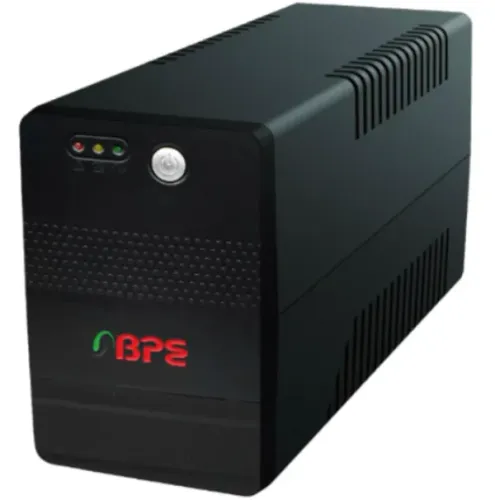
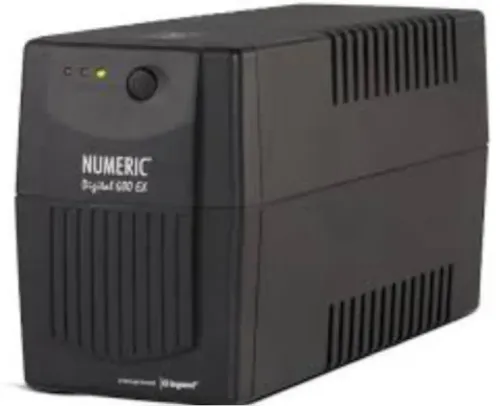
An online double-conversion UPS keeps a hospital elevator’s controller, brake coil, door operator, emergency lighting, alarm and intercom powered through a mains failure without waiting for source transfer. That prevents a controller reset, brake-release failure, door fault, failed drive restart and passenger entrapment.
| Option | Transfer behaviour | Outage duration and practical cost |
|---|---|---|
| Online double-conversion UPS | Immediate, conditioned output; no engine start or automatic transfer-switch delay | A five-to-fifteen-minute battery is a bridge, not extended backup, unless a much larger battery system is installed. It needs battery replacement and power-electronics maintenance, but produces no local exhaust and little noise. |
| Diesel generator | Requires engine start-up, automatic transfer-switch operation, voltage and frequency stabilisation, and correct phase sequence before restart | Runs for hours with fuel and refuelling, but needs exhaust treatment, fuel storage, plant-room space, test loading, engine maintenance and noise control. Its operating cost is usually lower for long outages. |
| Generator plus UPS | UPS carries the lift during generator starting and transfer; the generator then supplies the UPS or designated lift board | Provides uninterrupted ride-through and long runtime, but requires coordinated protection, bypass operation, earthing, neutral switching and generator compatibility. |
Therefore, lift ups vs generator for hospital elevator in nagpur is not a battery-versus-diesel product choice. The common hospital architecture uses both: UPS for uninterrupted control and rescue continuity, generator for extended operation. Evaluate elevator backup power in nagpur as a complete system, including the lift controls, rescue sequence and passenger safety.
What equipment must the backup power to complete a safe elevator rescue?
A safe hospital elevator rescue normally requires all three: an automatic rescue device, a lift UPS, and a generator. The rescue device moves a trapped car to the nearest floor and opens the doors; the UPS supplies the controller and rescue sequence without waiting for generator transfer; the generator provides long-duration standby power.
1. Obtain the lift manufacturer’s load schedule before choosing a hospital elevator UPS. Record motor rated kW or HP, drive input kVA, starting current, lift speed, passenger or stretcher load, controller type, brake-coil demand, door-operator load, car lighting, alarm, two-way intercom, emergency ventilation and any automatic rescue device.
2. Decide what the UPS must energise. Powering only the motor is not a complete elevator rescue system: a controller reset, failed brake release, door fault, dead alarm or lost intercom can still leave a patient trapped.
Specify the controller, brake, doors, rescue controls and safety services, then confirm whether the generator must support normal lift operation after the UPS bridge ends.
3. Address regenerative energy from traction lifts during braking or overhauling loads. Unmanaged reverse energy can cause DC-bus overvoltage, inverter trips or a bypass transfer. Require written compatibility using a regenerative drive, braking resistor or UPS rated for regenerative loads, plus overload curves for double-conversion, bypass and battery modes.
A nominal kVA rating alone does not prove rescue capability.
How should the generator, UPS and hospital lift controls work together?
Design the system as a coordinated source path, not a choice between two separate supplies. The online UPS carries the lift during generator start-up, then accepts generator power or feeds the designated lift distribution board, exactly as shown on the approved single-line diagram.
| Source path | During outage | After generator starts |
|---|---|---|
| UPS to lift controls | Maintains controller, brake, doors and rescue functions | Receives generator input where specified |
| Generator to UPS | Starts while the UPS bridges the interval | Supplies extended-duration operation |
| Generator to lift board | Not used unless the approved design permits it | Feeds the lift through the specified transfer arrangement |
Coordinate the automatic-transfer-switch delay with generator start time, AVR and governor settling, UPS bypass ratings, short-circuit protection, earthing, neutral switching, phase sequence, and permitted frequency and voltage limits.
A generator that runs hospital lights can still trip an elevator drive: acceleration creates a sharp load step, while rectifiers, harmonics and regenerative energy disturb voltage or frequency.
Obtain the lift supplier’s motor-starting kVA, drive input harmonics, overload curve and regenerative-load data before sizing the alternator. Do not multiply motor kW by a simple factor.
Verify these points in the approved design:
- Keep stretcher routes open and preserve movement to the ICU, operating theatre and emergency department.
- Coordinate normal lift operation, automatic rescue and fire-service operation.
- Check the National Building Code of India, local fire-authority conditions, lift regulations and the hospital’s essential-electrical-system schedule.
A UPS provides ride-through; it does not automatically replace a required standby source.
What should a Nagpur hospital specify before comparing lift UPS prices?
Do not compare lift UPS price in Nagpur from the kVA line alone. A hospital quotation must describe the lift, battery environment, generator interface and installation scope, because acceleration current and regenerative energy can trip a unit sized for a steady IT load.
1. Require the quotation to state battery chemistry, battery capacity, autonomy at the actual lift load, and five-year battery-replacement assumptions. Include overload curves in double-conversion, bypass and battery modes; short-circuit performance; static and maintenance bypass; regenerative-load compatibility; harmonic filtering; enclosure rating; and battery temperature compensation.
2. Specify Nagpur’s maximum design ambient temperature in °C, ventilation, dust filtration and filter-maintenance access. State whether air-conditioning is reliable, how battery temperature will be controlled, and whether the batteries must be placed outside an unconditioned lift machine room when the design requires it. Price the racks, battery isolation, front-access clearance and all safety provisions.
3. Make the bill of quantities identify cabling, protection, earthing, bypass panel, installation, commissioning and witnessed testing. Require alarm contacts to the building-management or nurse-call system, remote monitoring, and a written service response arrangement for battery and power-electronics faults.
Soumya Enterprises can support this process by assessing the lift load, generator interface, battery environment and installation scope before coordinating specification, commissioning and service. That produces a comparable scope for lift UPS for hospitals in Nagpur instead of a UPS box priced by nominal kVA.
Related product
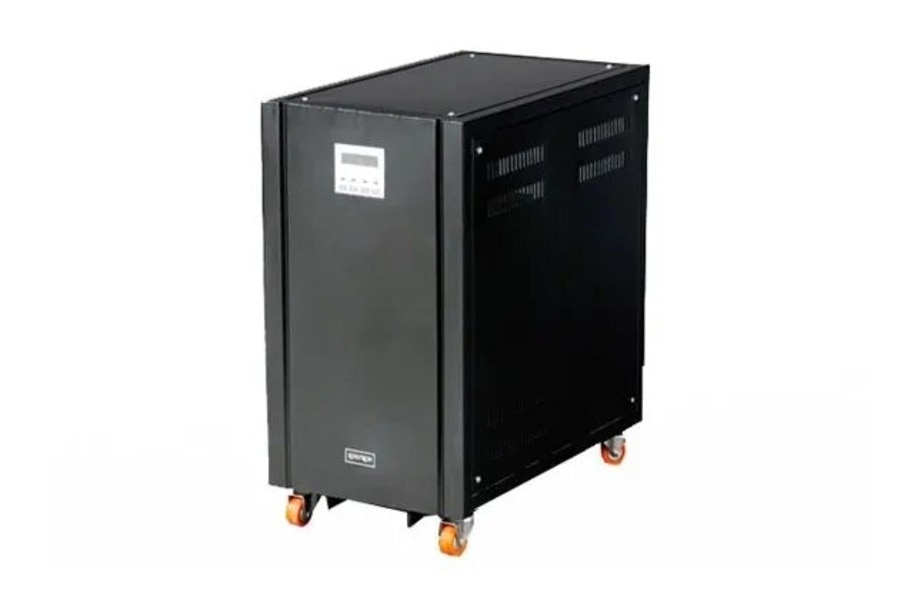
 | Lift UPS LIFT UPS is an OFF LINE UPS which has 3 main parts namely – Charger, Inverter and Batteries. View product → |
Which tests prove the backup system will work during a real hospital outage?
A witnessed site test—not a factory certificate—proves whether the installed UPS, generator, automatic transfer switch (ATS) and lift controller work together during an outage.
- Open the utility supply and record generator-start time, ATS transfer time, voltage, frequency, phase sequence, alarms and fault codes.
- Confirm battery operation, bypass operation, emergency lighting, alarm, two-way communication and fireman operation where applicable.
- Run the lift at representative passenger or stretcher load; record acceleration, braking and the exact floor reached during automatic rescue, door opening and passenger release.
- Test return transfer from generator to utility, repeated short outages, controller recovery after a reset and battery autonomy at the actual lift load.
- Return regenerative energy from the traction lift and confirm that the UPS or drive avoids DC-bus overvoltage, inverter trips and bypass transfer.
A failed rescue sequence, door release, controller restart or communication link is a failed acceptance test, even if the UPS output remains within limits.
| Option | Decision test | Accept only when |
|---|---|---|
| UPS-only | Battery runs the required outage period | Autonomy and the complete rescue sequence are demonstrated |
| Generator-only | Lift restarts after generator and ATS transfer | Lift-generator compatibility is proven and transfer delay is acceptable |
| UPS plus generator | UPS bridges starting and generator supplies long outages | Uninterrupted control power and extended operation are priorities |
Include diesel fuel, exhaust, noise, emissions, plant-room space, refuelling, periodic testing and lifecycle maintenance in the hospital’s total-cost review, not only the equipment price.
Frequently asked questions
Which backup source keeps a hospital elevator available during a power failure?
An online double-conversion UPS supplies continuous power without waiting for generator transfer, reducing controller resets and failed restarts. A generator can provide longer-duration power after starting and transferring.
What equipment must backup power support for a safe elevator rescue?
Specify the elevator controller, drive, brake coil, door operator, emergency lighting, alarm, intercom and required rescue controls. Confirm the lift manufacturer’s starting, running and regeneration requirements.
How should the generator, UPS and hospital lift controls work together?
The UPS should carry the lift through generator starting and transfer, while the generator supports extended operation. Coordinate bypass, changeover, controller restart logic, fire-service operation and battery charging with the lift contractor.
What should a Nagpur hospital specify before comparing lift UPS prices?
Record lift motor rating, drive type, starting current, rescue method, required autonomy, battery replacement plan, bypass arrangement, installation conditions and service response requirements.
Which tests prove the backup system will work during a real hospital outage?
Witness mains-failure, generator-start, source-transfer, UPS-bypass, full-load, elevator-rescue and battery-autonomy tests. Record voltage, frequency, transfer time, alarms and successful passenger communication.
Keywords