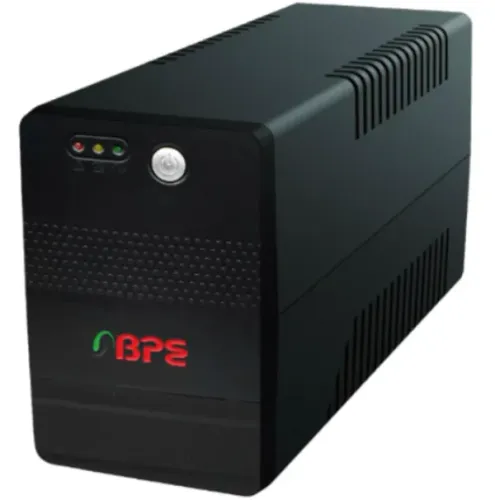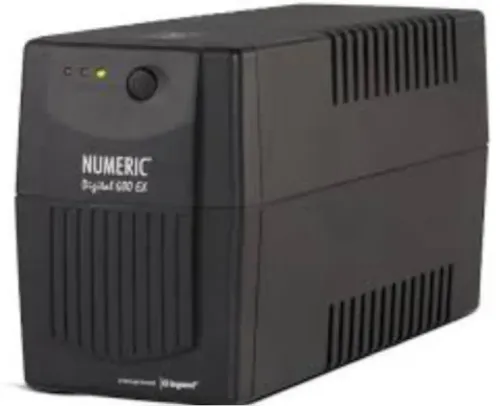
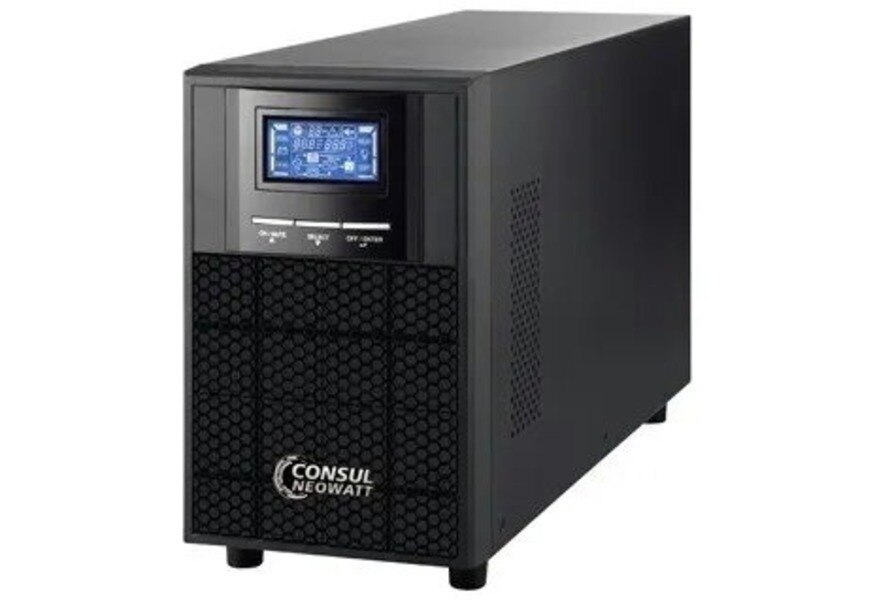
Choosing a Fuji Consul UPS starts with the equipment, electrical arrangement and power-quality problems at your Nagpur site—not with a kVA number copied from the largest nameplate. By the end, you will be able to define the load, compare UPS topologies, check autonomy and protection requirements, and prepare a specification that distinguishes a suitable model from an under-sized or incompatible one.
Key takeaways
- Size the UPS from measured watts, VA and starting current.
- Separate printer, copier and compressor inrush from electronic office loads.
- Specify phase, bypass, generator compatibility and earthing before requesting quotations.
- Include installation, battery testing and local service response in procurement terms.
Match the UPS to the office load, not the biggest nameplate
Select a Fuji Consul UPS from the equipment’s measured operating profile, not the largest nameplate in the room. A desktop, monitor, switch, access-control panel and server draw electronic loads; a laser printer or copier adds high fuser inrush, while an air-conditioning compressor needs separate starting-current treatment.
For fuji consul ups for offices, record each device’s watts, VA, power factor, operating hours and whether it must remain online. Add the actual running kW, check the exact UPS’s kW and kVA limits, then include planned equipment growth.
A 100 kVA UPS rated at 0.8 power factor cannot supply 100 kW; the lower limit governs.
- Desktops and monitors: group by measured load and shut down noncritical workstations first.
- Servers and storage: reserve continuous capacity and specify the required autonomy at present and end-of-life battery conditions.
- Network switches, routers and access control: place them on a dedicated protected circuit if their uptime exceeds ordinary office equipment.
- Printers, copiers and compressors: keep them off the UPS unless the manufacturer confirms their starting demand is acceptable.
For fuji consul ups for applications in nagpur, choose true online double-conversion when voltage fluctuation, generator frequency variation or frequent transfers threaten IT equipment. Line-interactive or standby units suit tolerant, noncritical loads—not unstable supply.
Before requesting a quote, state input and output voltage, phase, frequency, neutral arrangement and earthing scheme; a three-phase UPS is not interchangeable with a single-phase unit at the same kVA.
Size the UPS in watts, VA and starting current
A defensible UPS size comes from the highest simultaneous real load, its power factor, starting demand and required runtime—not the largest nameplate. For Fuji Consul UPS for offices, record actual watts for servers, switches, monitors, access-control systems and other protected equipment, then apply a documented growth allowance.
1. Add measured running watts at the busiest operating condition. Convert the result to kVA using kVA = kW ÷ power factor, then choose a model whose exact datasheet supports both figures. A 100 kVA UPS rated at 0.8 output power factor delivers only 80 kW; the lower kW or kVA limit governs.
2. Add expansion capacity separately, such as 20%, and keep it visible in the calculation. Do not hide future load inside an unexplained oversized rating.
3. Check peak and starting current for printers, compressors, pumps, fans, conveyors and other motors. Record inrush current, acceleration time, voltage dip and bypass capacity; a UPS selected only from running kW can trip during starting. Keep a motor outside the UPS unless the manufacturer approves starting it, or coordinate its starter, VFD and bypass.
4. Calculate autonomy from the battery system: nominal battery volts × amp-hours × number of strings × permitted usable fraction × UPS efficiency ÷ load watts. Require the exact model’s autonomy table at minimum and maximum load, including end-of-life batteries, temperature and recharge conditions. Runtime belongs to the battery configuration, not the cabinet alone.
Choose the topology and power-quality functions your site needs
Choose online double-conversion when voltage fluctuation, frequency variation, generator operation or repeated transfers could disrupt servers, networking equipment, PLCs or control electronics. Line-interactive and offline units are not equivalent substitutes in those conditions.
| Topology | What it does | When it applies |
|---|---|---|
| Online double-conversion | Converts AC to DC and regenerates clean AC continuously | Servers, sensitive controls and unstable Nagpur supply |
| Line-interactive | Uses an inverter and automatic voltage regulation during disturbances | Desktops, switches and small office loads with reasonably stable power |
| Offline or standby | Transfers the load to battery after an outage | Basic PCs and non-critical equipment where a short transfer gap is acceptable |
For fuji consul ups in nagpur, compare the exact model’s output kW as well as kVA. A 100 kVA unit rated at 0.8 power factor delivers 80 kW, not 100 kW; obtain the manufacturer’s kW curve for your operating condition.
Verify these protection and integration functions before approval:
- Automatic voltage regulation, input surge suppression and EMI/RFI filtering
- Overload, short-circuit, overtemperature and deep-discharge protection
- Static bypass, maintenance bypass and documented transfer time
- Output voltage and frequency regulation, including generator input limits
- Rectifier power factor, input-current distortion and soft-start or walk-in control
- Compatible neutral bonding, earthing and residual-current protection
Incorrect neutral-to-earth bonding can create nuisance trips or unsafe fault paths even when voltage readings look correct.
Specify phase, generator, bypass and earthing requirements for industrial equipment
A three-phase-input/three-phase-output UPS is not interchangeable with a single-phase office unit at the same kVA. Before requesting a Fuji Consul UPS in Nagpur, record the equipment’s supply and distribution arrangement.
1. Confirm input and output voltage: 230 V single-phase, 400/415 V three-phase, or the exact site value. Specify phase count, 50 Hz frequency, neutral arrangement, and whether the load needs a common or separately derived neutral.
2. State the earthing scheme, such as TN-S, TN-C-S, or TT, and measure neutral-to-earth voltage at the equipment panel. PLCs, DCS systems, instrumentation and 24 VDC power supplies can remain unstable when grounding is poor, even without a UPS overload alarm.
3. Test generator compatibility. Provide generator kVA, voltage, frequency tolerance, ramp time and neutral bonding details, then verify the UPS rectifier’s input-current distortion, frequency window and generator-sizing requirement.
4. Define the bypass path. Check static and maintenance-bypass ratings, upstream and downstream breaker coordination, and short-circuit capacity. A UPS inverter may not deliver enough fault current to clear a downstream fault.
5. Separate running load from starting load. Pumps, fans, compressors, conveyors, CNC auxiliaries and drives need checks for inrush, acceleration time, voltage dip and bypass capacity; keep motors outside the UPS unless the manufacturer approves starting them.
6. For Fuji Consul UPS industrial use, demand an autonomy table at actual minimum and maximum kW, including end-of-life battery performance, temperature and recharge limits.
Turn the requirement into a Nagpur procurement and service specification
Make the quotation conditional on proof for the exact Fuji Consul model, not a product-family name. For Fuji Consul UPS for applications in Nagpur, ask for the manufacturer’s datasheet showing model number, topology, input and output voltage, phase arrangement, frequency, neutral, earthing scheme, kVA, kW, overload curve, bypass rating and operating limits.
Request these documents and commitments:
- A kW-versus-kVA output curve for the stated operating condition; a 100 kVA unit rated at 0.8 power factor delivers 80 kW, not 100 kW.
- An autonomy table at the minimum and maximum project load, including battery age at end of life, end-of-discharge voltage, temperature, number of strings and recharge time.
- Battery make, chemistry, Ah rating, quantity, string arrangement, design life, warranty, replacement procedure and the battery test method.
- A site survey covering cable sizes, protection coordination, ventilation, floor loading, clearances, earthing and generator compatibility.
- A commissioning record showing load transfer, bypass operation, alarms, recharge and measured runtime.
- Written response times, Nagpur spare-parts stock, preventive-maintenance frequency, battery-replacement lead time and access to a trained service engineer.
For Fuji Consul UPS industrial use, require separate evidence for motor-driven pumps, fans, compressors and conveyors: starting current, acceleration time, voltage dip and bypass capacity. Soumya Enterprises should record whether each motor stays outside the UPS or needs explicit manufacturer approval for starting.
Related product
 | UPS Fuji Consul UPS View product → |
Frequently asked questions
How do you match a Fuji Consul UPS to an office load?
List each device, measure or confirm its operating watts and VA, and separate sensitive electronics from printers, copiers and air-conditioning compressors with high inrush.
Why do watts, VA and starting current all matter when sizing a UPS?
Watts describe real power, VA describes apparent power, and starting current determines whether equipment can start without overloading the UPS.
Which UPS topology and power-quality functions should an office or industrial site choose?
Choose the topology according to outage frequency, voltage instability, load sensitivity and transfer-time tolerance; specify voltage regulation, filtering or zero-transfer operation where the equipment requires it.
What should a Nagpur industrial UPS specification include?
State the input and output phase, load schedule, generator details, maintenance bypass, earthing arrangement, battery requirements, installation scope and service response terms.
Keywords