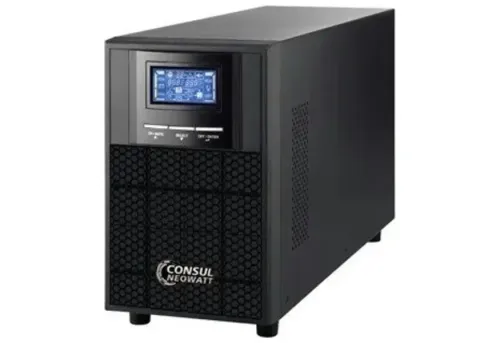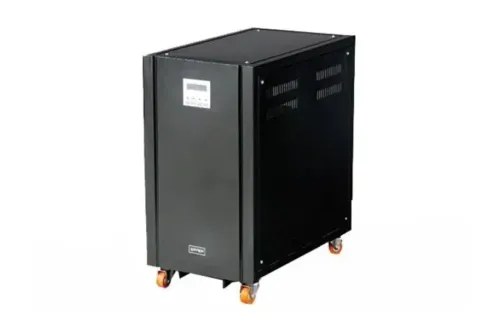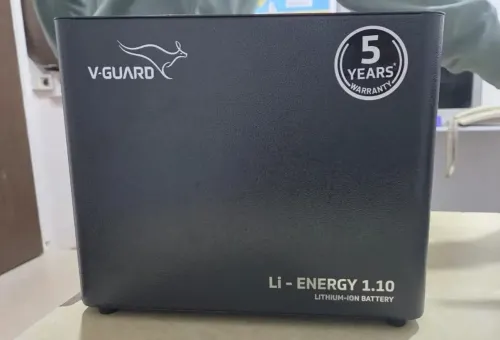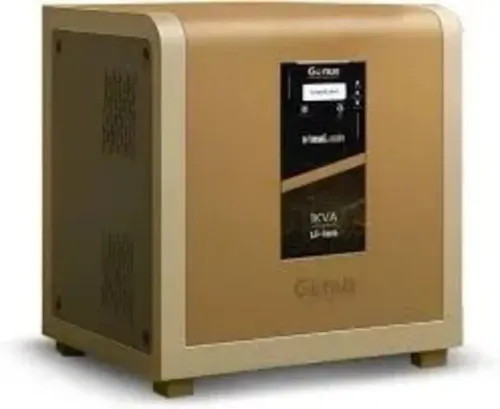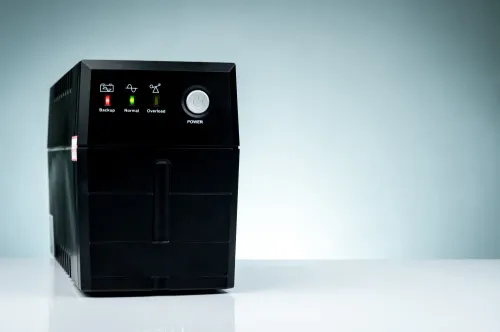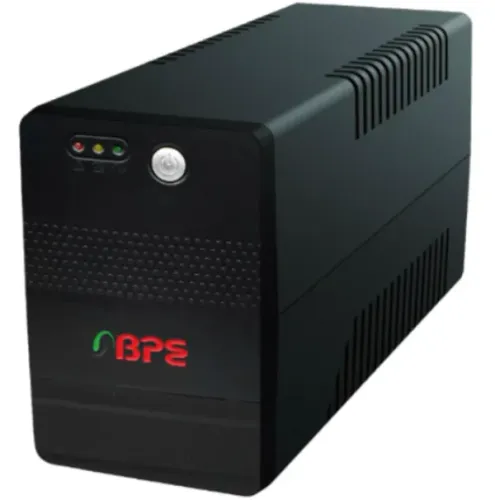
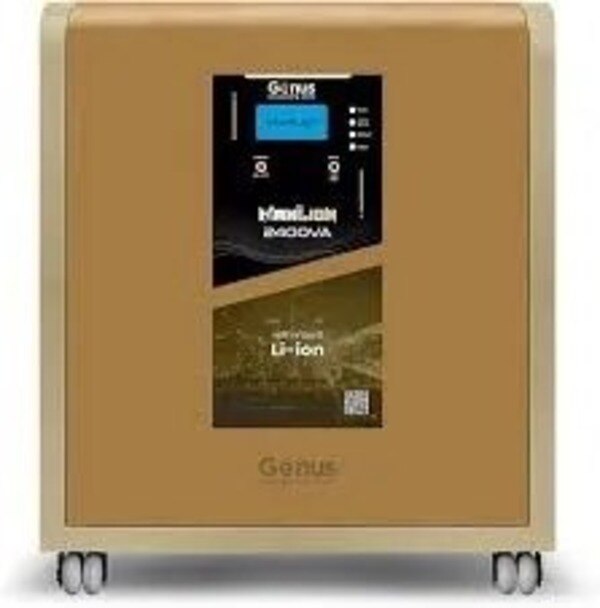
A Genus MaxiLion inverter can protect essential single-phase equipment, but its VA label does not tell you whether it will start a pump, support an elevator control panel, or run through a Nagpur power cut for the required time. By checking real watts, surge current, battery energy, environmental conditions, and the cost of a failed load, you can decide whether the 1000 or 2400 is suitable—or whether you need an industrial UPS or inverter instead.
Key takeaways
- Use MaxiLion for segregated single-phase essential loads, not whole-factory machinery.
- Calculate running watts, starting current and battery capacity before selecting a model.
- Compare MaxiLion 1000 and 2400 against your load’s surge and backup requirements.
- Demand an on-site load test, battery inspection and written service plan before purchase.
When a MaxiLion is a sensible industrial purchase
A MaxiLion is worth considering when you need economical backup for a segregated, single-phase essential-load circuit. It can support computers, routers, CCTV, access control, billing terminals, small PLC panels, laboratory instruments and selected lighting.
For anyone asking, “Is Genus Maxilion inverter worth it for industries in Nagpur?”, the answer is yes for that narrow use—not for a complete factory supply. The range does not inherently provide three-phase output, static bypass, generator synchronisation, parallel redundancy or a maintenance bypass.
A wrong choice can stop motors, interrupt controls, corrupt data or leave production unprotected.
| Option | Choose it when | Main limitation |
|---|---|---|
| Online double-conversion UPS | Zero-interruption transfer and sensitive controls matter | Higher cost and battery-system complexity |
| Lead-acid or tubular-battery inverter | You need lower-cost, longer backup | More maintenance and slower transfer |
| Diesel generator | Loads need extended, high-power operation | Fuel, noise, starting delay and changeover equipment |
| True industrial inverter | Motors, high short-circuit capacity or demanding controls are involved | Higher specification and installation cost |
| MaxiLion | A small, essential single-phase circuit is enough | Not a factory-wide industrial UPS |
“Genus inverter for industry” describes an application decision, not a separate industrial product class. Choose the wrong category and a low running-watt estimate will not prevent failure when a pump, compressor, printer or motor draws its starting surge.
How to calculate whether the load fits the inverter
1. Build a nameplate schedule before choosing a model. For every device, record running watts, power factor, starting or inrush current, and required backup minutes; then mark each circuit essential or non-essential.
2. Convert watts to apparent power: VA = watts ÷ power factor. A 1,000 VA label does not guarantee 1,000 W. A commonly listed MaxiLion 1000 rating of 800 VA at 0.8 power factor equals about 640 W. The commonly listed MaxiLion 2400 rating of 2,000 VA at 0.8 equals about 1,600 W.
3.
Test a sample Nagpur control-room schedule: two computers at 200 W, networking at 50 W, CCTV at 60 W, two billing terminals at 160 W, PLC controls at 100 W, a laboratory instrument at 220 W, and small office equipment at 60 W. The essential total is 850 W, or about 1,063 VA at 0.8 power factor.
4. That load already exceeds the practical 640 W of the 1000, while remaining below the 1,600 W of the 2400. Adding a 450 W printer raises running demand to 1,300 W; a printer’s inrush must be added separately.
A 750 W pump or compressor could push running demand to 1,600 W, then exceed the inverter during starting.
5. Leave operating headroom instead of sizing to the limit. Printers, compressors, pumps, welding sets, refrigeration, machine tools, elevators, and multiple motors need a manufacturer-confirmed surge test because running watts cannot predict starting current.
Those checks distinguish the Genus Maxilion 1000 benefits for small essential circuits from the Genus Maxilion 2400 benefits for larger single-phase support loads.
Which specifications and battery conditions decide real backup
Approve only after obtaining the manufacturer’s written figures; catalogue positioning does not establish real backup. For an industrial inverter in Nagpur, demand these specifications:
| Figure | Maxilion 1000 | Maxilion 2400 |
|---|---|---|
| Continuous output | Confirm actual watts; commonly about 640 W at 0.8 power factor | Confirm actual watts; commonly about 1,600 W at 0.8 power factor |
| Waveform and surge | Confirm pure sine wave, surge watts, duration, and overload limit | Confirm pure sine wave, surge watts, duration, and overload limit |
| Switching | Confirm transfer time, output-voltage and frequency tolerance | Confirm transfer time, output-voltage and frequency tolerance |
| Battery performance | Confirm recharge current, charging time, low-battery cut-off, runtime at stated loads, and expansion options | Confirm the same figures for its 24 V bank |
Runtime hours = voltage × ampere-hours × usable depth of discharge × inverter efficiency ÷ load watts. One 150 Ah, 12 V battery stores about 1.8 kWh nominally; two in series provide 24 V, 150 Ah and about 3.6 kWh. AC energy is lower after losses, ageing, discharge-rate effects, and temperature.
A 12 V unit drawing 600–640 W may pull 60–70 A; a 24 V unit delivering 1.6 kW may pull 70–80 A. Use short, correctly sized cables, crimped lugs, protected terminals, and a fuse or DC breaker.
Install batteries with ventilation, away from Nagpur heat, dust, and roof-temperature extremes. For LiFePO4, verify usable depth of discharge, cycle-life warranty, replacement procedure, and service downtime rather than assuming them.
MaxiLion 1000 or 2400: match the model to the load
The Genus Maxilion 1000 benefits smaller essential circuits because its compact, plug-and-play format fits a small control panel, router and network rack, CCTV recorder, access-control system, billing station, one or two computers, or a low-power laboratory and office circuit.
| Model | Practical fit | Main limitation |
|---|---|---|
| Maxilion 1000 | Compact backup for low-power, single-phase controls and electronics | Capacity becomes the constraint when loads include printers, heaters, compressors, pumps, refrigeration, welding, elevators, machine tools, or motor-heavy production equipment |
| Maxilion 2400 | More headroom for a small office, control room, security system, or selected production-support circuit | A 2,000 VA-class unit still cannot be treated as whole-factory or motor-duty backup |
The Genus Maxilion 2400 benefits from a 24 V battery architecture. At similar output, it generally draws less DC current than a 12 V system, reducing cable losses and voltage drop.
Its integrated LiFePO4 battery reduces routine battery maintenance, but it does not guarantee long life, high usable depth of discharge, easy field replacement, or zero service downtime; verify cycle-life terms and the replacement procedure.
Require cold-start and restart tests for motors, PLC panels, instruments, servers, and elevator controls. Test laser printers and refrigeration separately because their inrush can trip an otherwise acceptable running load.
Pure sine wave improves compatibility with computers, instruments, induction motors, and switch-mode supplies. It does not make either model an online UPS, voltage stabiliser, or industrial motor inverter.
Make the purchase decision with an on-site test and service plan
Approve only after the site survey answers one question: is genus maxilion inverter worth it for industries in nagpur when failure stops production? Require the Nagpur supplier or installer, including Soumya Enterprises, to record:
1. A written load schedule confirming single-phase or three-phase supply, running watts, power factor, inrush, backup minutes, battery arrangement, ambient-temperature limit, earthing plan, cable and protection schedule, acceptable transfer interruption, and the consequence of inverter failure.
2. On-site acceptance tests covering transfer time during a mains interruption; output voltage and frequency under step load; overload response; battery-low cut-off; recharge performance; alarms; bypass behaviour, if provided; cold motor start; motor restart; and recovery after power returns. Demonstrate the actual computers, PLCs, instruments, motors, and control circuits.
3. The proposed model, battery configuration, warranty, response time, and LiFePO4 servicing or replacement procedure must be documented, including expected downtime.
Reject the MaxiLion if the load needs three-phase output, zero-interruption transfer, high short-circuit capacity, generator synchronisation, static or maintenance bypass, continuous motor duty, or redundancy. Specify an online double-conversion UPS for sensitive uninterrupted loads, an industrial inverter for motor-heavy duty, a generator for extended high-power outages, or redundant architecture when one failure is unacceptable.
The 1000 suits small essential circuits; the 2400 suits a larger single-phase support circuit. Neither should power an entire factory on VA alone. For an industrial inverter in Nagpur, approve only after these tests pass.
Related products
 | Inverter The Genus MaxiLion 1000 (1000VA / 1KVA) is a compact, plug-and-play power backup system designed for small to mid-sized homes, apartments, and shops. View product → |
 | Inverter The Genus MaxiLion 2400 (2400VA / 2.4KVA) is a premium, next-generation power backup solution. View product → |
Frequently asked questions
When is a Genus MaxiLion inverter a sensible industrial purchase?
A MaxiLion makes sense for a segregated, single-phase essential-load circuit serving computers, routers, CCTV, access control, billing terminals, small PLC panels, laboratory instruments or selected lighting. It is not a substitute for a three-phase industrial UPS or generator serving motors and an entire plant.
How do you calculate whether the load fits a MaxiLion inverter?
List every device on the backup circuit, record its running watts, add the starting demand of motors or other inductive equipment, and compare the total with the inverter’s rated output and surge rating. Leave operating headroom instead of sizing exactly to the nameplate total.
What decides real backup time from a MaxiLion inverter?
Backup depends on the connected load, battery voltage and amp-hour rating, battery age, discharge efficiency, temperature, charging condition and cable losses. Test the actual load rather than relying only on a runtime estimate.
How should you choose between MaxiLion 1000 and MaxiLion 2400?
Choose the 1000 for a smaller essential-load circuit that fits its continuous and surge limits. Choose the 2400 when the measured load and starting demand require more output, then confirm battery capacity, wiring and installation space with an on-site assessment.
Keywords